Numbers for good health: guidelines worth knowing
Numbers for good health help notice risks in time and better understand the signals of the body. Blood pressure, pulse, sleep, waist circumference, level of physical activity, and basic tests do not replace a doctor, but they provide clear guidelines for prevention. This article gathers practical indicators for adults, explaining how to measure them and when to seek medical advice.
It is important to remember: “normal” depends on age, gender, pregnancy, chronic diseases, medications, and level of fitness. Therefore, use these values as a starting point, not as a diagnosis.
Key indicators to know
Below are the basic health numbers that are most often used by doctors and prevention specialists. They help assess the load on the heart, metabolism, recovery quality, and lifestyle.
| Indicator | Guideline for most adults | How often to check |
|---|---|---|
| Blood pressure | about 120/80 mm Hg; often considered high from 130/80 | at home when risks are present, regularly during check-ups |
| Resting pulse | about 60–100 beats per minute | several times a month or as needed |
| Sleep | 7–9 hours a day | track habits daily |
| Steps and movement | goal — sit less; often use 7,000–10,000 steps | daily or weekly |
| Moderate activity | at least 150 minutes a week | weekly |
| Waist circumference | risk increases above 80 cm for women and 94 cm for men | once a month |
| Fiber | about 25–38 g per day | based on diet |
| Alcohol | the less, the better; no universally safe dose | monitor continuously |
These numbers should not turn into obsessive control. It's much more helpful to look at trends. For example, a one-time increase in pressure after stress does not equal illness, but consistently high values require attention.
Pressure and pulse
Blood pressure
Blood pressure shows how strongly blood pushes against the walls of blood vessels. The upper number is called systolic, and the lower one is diastolic. For many adults, a good guideline is a pressure around 120/80 mm Hg. If the readings are often above 130/80, it is worth discussing with a doctor, especially if there is overweight, diabetes, smoking, kidney diseases, or a family history of hypertension.
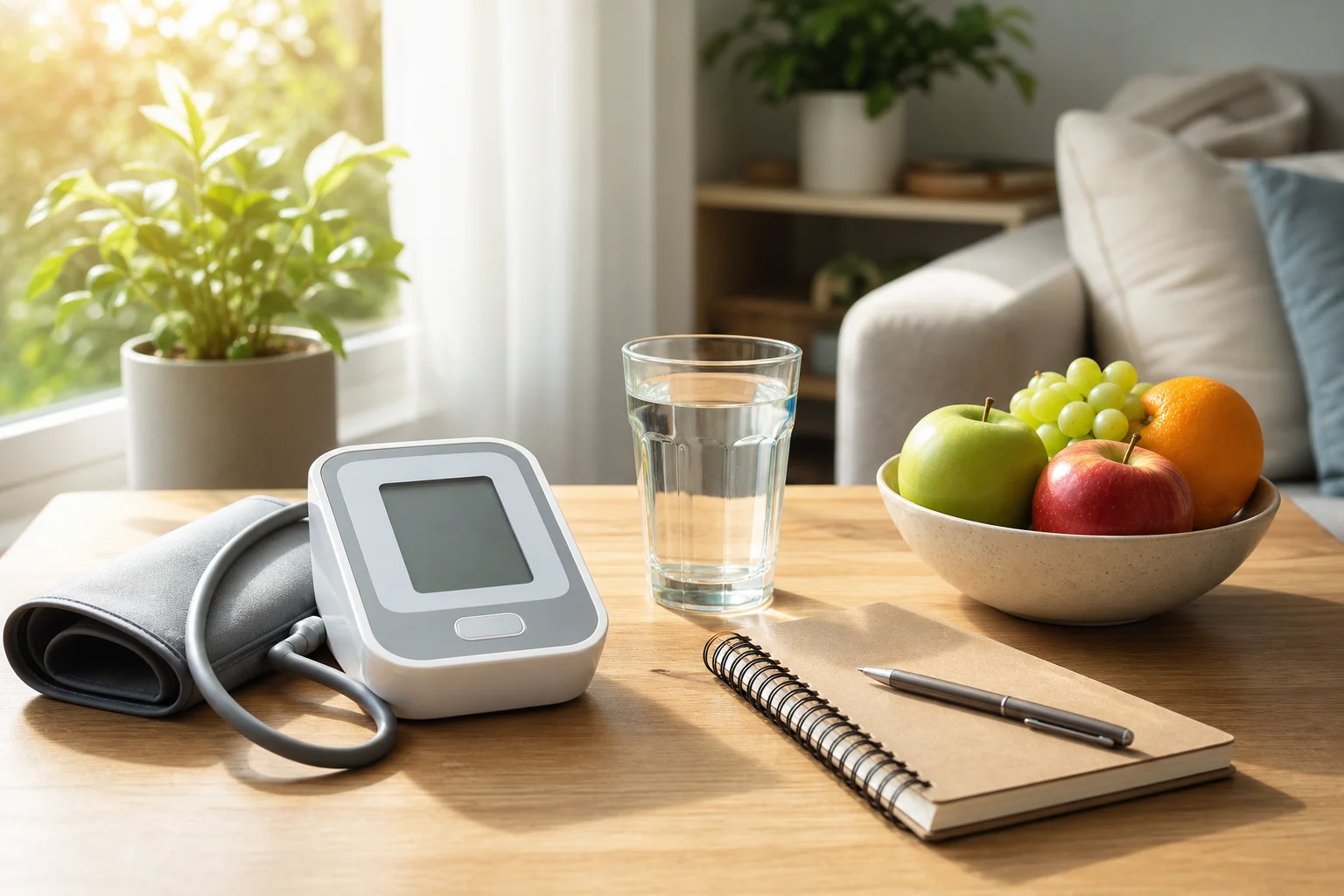
To ensure more accurate measurement, sit calmly for 5 minutes, place your feet on the floor, don’t talk, and keep the cuff at heart level. Coffee, nicotine, and physical activity before the measurement can distort the result.
Resting pulse
The resting pulse for most adults ranges from 60 to 100 beats per minute. In trained individuals, it may be lower. It is important not only to note the number but also any symptoms. If the pulse is regularly too high or too low, accompanied by shortness of breath, chest pain, fainting, or pronounced weakness, medical help is needed.
It is convenient to measure the pulse in the morning after waking up. Write down the values for several consecutive days. This way, you will see your personal baseline level.
Sleep, recovery, and stress
Sleep is one of the most underestimated health indicators. Most adults need 7–9 hours of sleep per day. Some may need slightly less, while others require more, but chronic sleep deprivation almost always affects mood, appetite, attention, blood pressure, and immune resistance.
Pay attention not only to duration but also to quality. Frequent awakenings, loud snoring, breathing stops during sleep, morning headaches, and excessive daytime sleepiness can indicate sleep disorders.
For recovery, it is helpful to track three simple numbers:
- time of going to bed and waking up;
- total hours of sleep;
- number of days in a week when you wake up feeling refreshed.
If the number of “good” days is less than half, start with a routine, bright light in the morning, limiting screens before bed, and reducing caffeine in the afternoon.
Movement and physical activity
Physical activity reduces the risks of many chronic diseases and helps maintain weight, blood pressure, mood, and mobility. International recommendations for adults often come down to two goals: at least 150 minutes of moderate aerobic exercise per week and strength exercises 2 times a week.
Moderate activity includes brisk walking, cycling at a slow pace, swimming, dancing, or gardening, during which breathing increases but you can still talk.
Four-week step-by-step plan
- Week 1: measure your starting point. See how many steps you take on a typical day. Don’t change your behavior for the first 3–4 days.
- Week 2: add 10 minutes of walking. Choose a convenient time: after lunch, in the evening, or on your way to work.
- Week 3: increase activity to 30 minutes. You can divide it into 2–3 short walks.
- Week 4: add strength exercises. Use squats, wall push-ups, resistance band pulls, or body weight exercises.
- Beyond: gradually increase the load. Increase the volume by no more than a comfortable step to avoid injury and burnout.
If you have heart diseases, joint issues, pronounced shortness of breath, or pain during exertion, discuss the plan with a doctor.

Nutrition in numbers
Nutrition should not be reduced to just calories. However, some numbers help make the diet more balanced.
Firstly, aim for 5 servings of vegetables and fruits per day. One serving is about a handful of berries, a medium fruit, a cup of leafy greens, or half a cup of chopped vegetables. Secondly, watch your fiber intake: women are often advised to consume about 25 g per day, while men should aim for about 38 g. Sources include legumes, whole grains, vegetables, fruits, nuts, and seeds.
It’s better to limit salt. For many adults, an upper guideline is about 5 g of salt per day, which corresponds to about one teaspoon. In cases of hypertension, a doctor may recommend stricter limits.
Reduce sugar from sweetened drinks, desserts, and ultra-processed foods. A practical approach is to replace sweet soda with water, add protein to breakfast, and keep home foods that are easy to assemble into a regular meal: eggs, unsweetened yogurt, cottage cheese, fish, beans, grains, frozen vegetables.
Weight, waist, and body composition
Weight alone does not give a complete picture. A person may have a normal body mass index but a high volume of visceral fat. Therefore, it is helpful to look at waist circumference, well-being, blood pressure, tests, and activity level.
Body mass index is calculated as follows: weight in kilograms divided by height in meters squared. A range of 18.5–24.9 is often considered normal for adults, 25–29.9 as overweight, and 30 and above as obesity. However, BMI does not account for muscle mass, fat distribution, and individual characteristics.
Waist circumference is measured at the midpoint between the lower rib and the top of the pelvic bone after a calm exhalation. The risk of metabolic disorders increases above 80 cm for women and 94 cm for men, and even more above 88 cm and 102 cm, respectively.
Tests and preventive checks
Some indicators cannot be assessed by feelings alone. For example, high cholesterol or elevated blood glucose may not show symptoms for a long time. Therefore, preventive checks are important, even when feeling well.
Discussion with your doctor can include:
- blood glucose or HbA1c to assess diabetes risk;
- lipid profile: total cholesterol, LDL, HDL, and triglycerides;
- complete blood count when there are complaints of weakness, fatigue, or frequent infections;
- ferritin, vitamin D, TSH, and other tests only as indicated;
- cancer screening, vaccinations, and examinations appropriate for age.
Do not prescribe yourself large panels of tests without a purpose. It’s better to understand beforehand what question the result is supposed to answer and what you will do next.
How to track numbers without anxiety
Numbers are useful when they help to take action. However, constant measurements can increase anxiety. Therefore, choose a few indicators that are truly important for your situation.
A good system looks like this:
- Set a goal. For example: lower blood pressure, improve sleep, or move more.
- Choose 2–3 indicators. For blood pressure, this could include morning measurements, salt in the diet, and minutes of walking.
- Record data in one place. A notebook, table, or app will work.
- Look at average values. Don’t jump to conclusions based on one day’s data.
- Plan a small action. For example, go to bed 20 minutes earlier or add vegetables to lunch.
- Review the plan once a month. If there is no progress, change strategies or consult a specialist.
This approach makes numbers a tool rather than a source of pressure.
Frequently asked questions
What numbers for good health are most important to track at home?
For most people, tracking blood pressure, resting pulse, sleep duration, activity level, waist circumference, and weight trends is sufficient. If there are chronic diseases, a doctor should compile the list.
How much water should you drink in a day?
There is no single norm for everyone. Needs depend on weight, diet, climate, physical activity, and health status. A practical guideline is light yellow urine color and absence of thirst for most of the day. In case of kidney or heart diseases, the volume of fluid should be aligned with a doctor.
Is it true that you have to walk exactly 10,000 steps?
No, that is a convenient guideline, not a medical boundary. Benefits begin with reducing sitting time and gradually increasing activity. If you currently walk 3,000 steps, a goal of 5,000–6,000 can be a great first step.
When should you seek help urgently?
Do not delay seeking help if there is chest pain or pressure, sudden weakness on one side of the body, speech impairment, severe shortness of breath, fainting, a sudden unusual headache, or pressure around 180/120 mm Hg and above, especially with symptoms.
Conclusion
Numbers for good health work best when linked to simple actions: move more, sleep 7–9 hours, monitor blood pressure, choose fiber-rich foods, and undergo preventive checks. Choose one indicator today, measure it correctly, and plan a small step for the coming week. If values go beyond guidelines or if you are concerned about your well-being, discuss the results with a doctor.