Numbers in myths and legends: meaning, symbolism, and examples
Numbers in myths and legends are rarely a random detail. They help describe the structure of the world, the order of time, the strength of the gods, the path of the hero, and the boundaries between the human and the sacred. In different cultures, the same numbers can acquire similar meanings: three is associated with trials and completeness, seven with cosmic order, and twelve with the calendar and authority. However, the meaning always depends on the context, plot, and tradition.
Why numbers became the language of myth
Before the emergence of scientific models, people explained the world through images. Numbers were a convenient way to organize chaos: day and night, seasons, directions, phases of the Moon, generations of gods and heroes. Therefore, numerical symbolism is found in mythology, epics, fairy tales, religious texts, and rituals.
It is important to understand: a mythological number does not always imply an exact count. The phrase “three days and three nights” can convey the fullness of an experience, while “forty years” signifies a long period of transition or purification. A number acts as a sign that the reader or listener recognizes almost immediately.
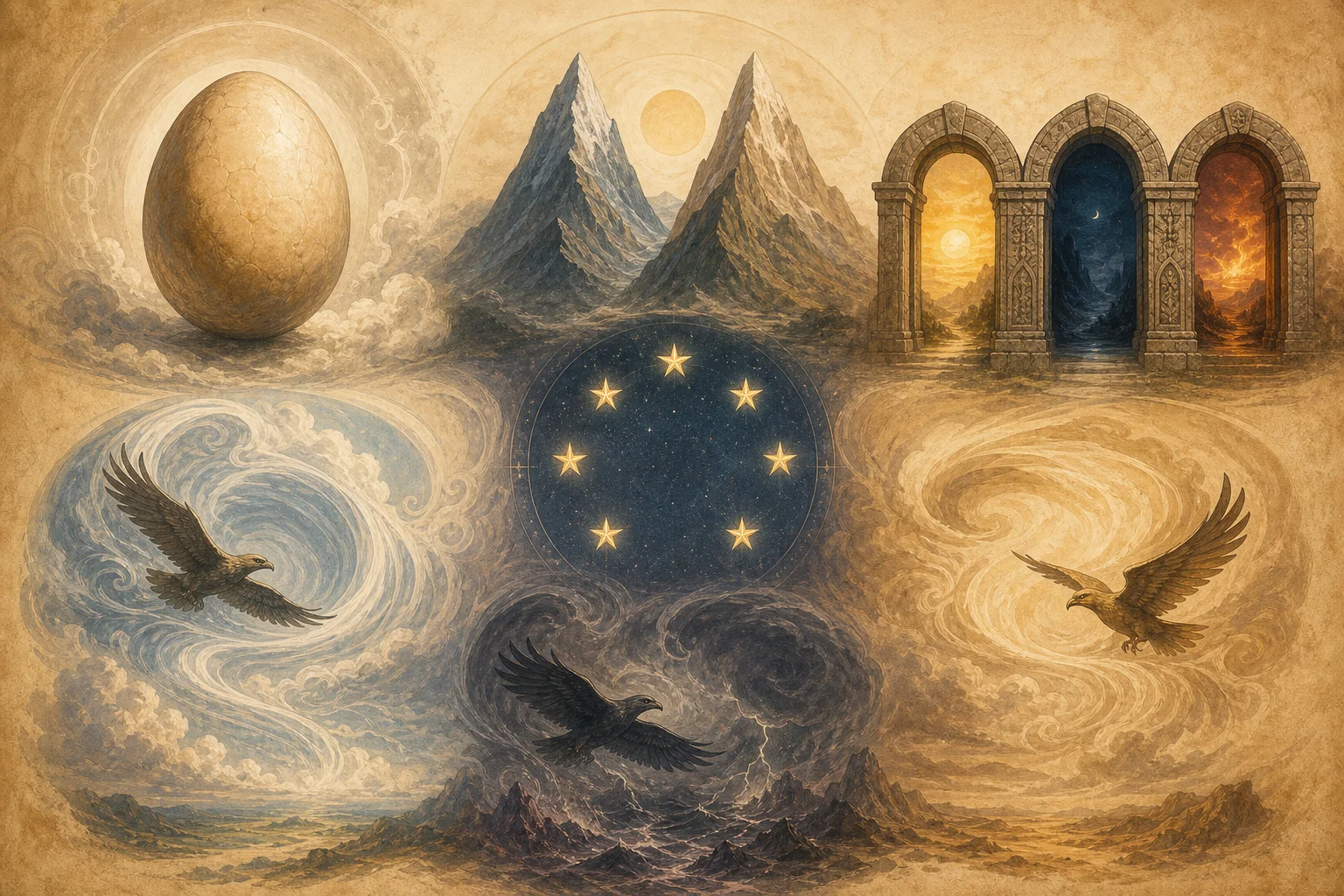
The most significant numbers in myths and legends
One as beginning and source
The number one is often associated with beginnings, unity, and the highest principle. In myths, this can be a primal ocean, a world egg, a single Creator, or the first mountain that rose from chaos. One is not always “small.” On the contrary, it can signify the wholeness from which many arise.
In legends, a hero often stands alone before a decisive test. This emphasizes their uniqueness and separates them from the ordinary world. The solitary path becomes a sign of transition to a new role.
Two as opposition and choice
The number two expresses duality: light and darkness, life and death, sky and earth, masculine and feminine, order and chaos. In many myths, the world is born through the division of a pair of opposites. For example, the sky separates from the earth, and day from night.
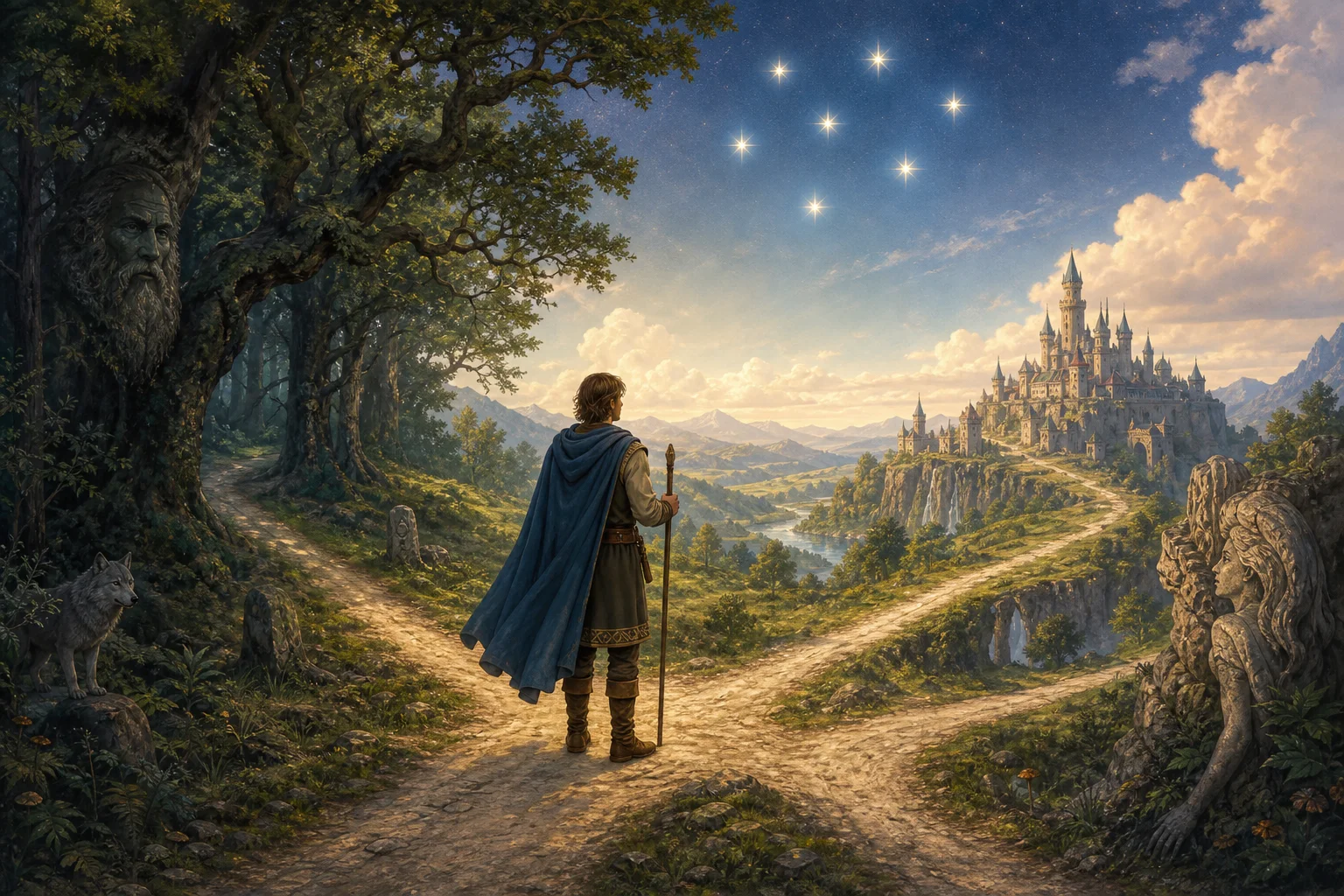
The number two is also associated with choice. The hero stands at a crossroads, meets two advisors, or receives two possible paths. This motif helps to show inner conflict and the price of decision.
Three as completeness and trial
The number three is one of the most common mythological numbers. In fairy tales, a hero receives three tasks, repeats an action three times, or meets three helpers. In Greek mythology, the three Fates determine destiny. In Scandinavian tradition, there are three Norns associated with the past, present, and future.
Three is convenient for storytelling. The first repetition introduces a rule, the second heightens anticipation, and the third concludes the cycle. Therefore, the number three is perceived as a rhythm in which an event becomes significant.
Four as the world and stability
The number four often indicates earthly order. This includes four cardinal directions, four seasons, four winds, and four corners of a house or temple. In myths, such a number helps to represent space as a completed and stable system.
In some traditions, four beings guard the cardinal points. In others, four rivers flow from a sacred center. The overarching idea is similar: the world is not chaotic; it has structure and boundaries.
Seven as cosmos, mystery, and sacred order
The number seven has become a symbol of fullness and hidden knowledge in many cultures. It is associated with the visible celestial bodies of antiquity, phases of time, purification rituals, and degrees of initiation. In legends, there are seven doors, seven brothers, seven sages, seven heavens, or seven underworld levels.
Seven often signifies not merely quantity but a journey through levels. A character goes through seven stages to approach the center of the mystery or acquire new power.
Nine as an enhanced three
Nine can be understood as “three times three.” Therefore, it often amplifies the significance of three: completeness, destiny, transition. In Scandinavian mythology, Odin hangs on the world tree for nine nights to acquire the runes. This narrative shows the price of knowledge and the connection of the number with initiation.
In folklore, nine lands, nine castles, or nine trials can denote great distance. This is not always geographical; often it concerns spiritual or symbolic remoteness.
Twelve as calendar and power
Twelve is closely linked to the cycle of time. The year has twelve months, and the zodiac circle has twelve signs. Therefore, this number has become a convenient model for cosmic order. In Greek myths, there are twelve Olympian gods. In epics and legends, there emerge twelve warriors, judges, or guardians.
Such a number emphasizes the completeness of the system. While seven is often associated with mystery, twelve is linked to organized authority, the calendar, and a stable circle.
Forty as a period of trial and transition
Forty often denotes a long period of purification, wandering, or preparation. In religious and legendary narratives, this time separates the old state from the new. The number might be associated with waiting, a desert, fasting, travel, or maturation.
When a tradition speaks of forty days or forty years, it often stresses the completeness of the transition. A hero, people, or saint undergoes a test and emerges changed.
Table of meanings of popular numbers
| Number | Common meanings | Where the motif occurs |
|---|---|---|
| 1 | Beginning, unity, source | Cosmogonic myths, creation legends |
| 2 | Opposition, choice, pair | Myths of the world's division, stories of crossroads |
| 3 | Trial, completeness, destiny | Fairy tales, Greek and Scandinavian mythology |
| 4 | Earthly order, cardinal directions, stability | Cosmological schemes, rituals, temples |
| 7 | Mystery, fullness, sacred path | Legends about the heavens, sages, degrees of initiation |
| 9 | Enhanced three, initiation, distant path | Scandinavian myths, fairy tales |
| 12 | Calendar circle, authority, system | Olympian gods, zodiac, heroic bands |
| 40 | Trial, purification, transition | Religious traditions, legends of wanderings |
How to read numerical symbolism in legends
To avoid misinterpretation, it is useful to look not only at the number itself but also at its role in the plot.
- Determine the context. Where does the number appear: in the description of the world, in a ritual, in the hero’s task, or in a period of waiting?
- Check for repetition. If the number is repeated several times, it almost certainly carries symbolic weight.
- Compare with culture. Seven in one tradition may relate to the heavens, while in another it is associated with rituals or lineage.
- Look at the function. The number might signify order, trial, completeness, boundary, or transition.
- Do not reduce everything to one formula. In myths, the meaning is flexible. The same symbol changes depending on the plot.
This approach helps to read a myth not as a riddle with a single answer but as a system of images.
Numbers in different cultural traditions
Ancient myths
In ancient mythology, numbers are often associated with gods, fate, and the structure of the cosmos. The three Fates spin the thread of life, the twelve Olympians create a heavenly-political order, and the labors of Hercules are usually listed as twelve great trials. Here, the number helps make the myth memorable and emphasizes the hero's scale.
Scandinavian plots
In Scandinavian tradition, the nine worlds associated with the world tree Yggdrasil play an important role. The nine nights of Odin on the tree symbolize sacrifice for knowledge. In these plots, the number indicates the complex structure of the universe and the path through suffering to wisdom.
Slavic and European folklore
In the fairy tales of Eastern Europe, three brothers, three roads, the faraway kingdom, seven castles, or twelve months are often encountered. These numbers create a rhythm to the narrative. They help the listener understand that the hero is leaving the ordinary world and entering the realm of wonder.
The expression “the faraway kingdom” should not be understood literally. It signifies a very distant, almost otherworldly place where different rules apply.
Biblical and religious traditions
In religious texts, numerical symbolism is often related to covenant, trial, and the fullness of time. The seven days of creation illustrate a completed cycle. Forty days may denote purification and preparation. Twelve tribes or disciples emphasize the idea of community and holistic order.
Such numbers have influenced not only theology but also European literature, painting, and folk legends.
Why the same numbers are repeated
The repetition is explained by several reasons. Firstly, people observed the same natural cycles: the change of seasons, the movement of celestial bodies, lunar phases. Secondly, myths were passed down orally, and stable numbers facilitated memorization. Thirdly, cultures exchanged plots through trade, wars, migrations, and religious contacts.
Moreover, some numbers are convenient for storytelling. Three creates an understandable rhythm. Four describes space. Seven sounds like a number of mystery. Twelve easily connects with the calendar. Therefore, numbers have become universal tools of mythological thinking.
Frequently asked questions about numbers in myths and legends
What is the most important number in mythology?
There is no single answer. In world myths, three, seven, nine, and twelve are especially common. Their significance depends on culture and plot.
Why is the number three so frequently seen in fairy tales?
Three creates a simple and powerful narrative rhythm. Three attempts, three brothers, or three tasks help to show the development of action and conclude the trial.
What does the number seven represent in legends?
Seven is usually associated with fullness, mystery, sacred order, or steps of a path. However, the specific meaning in a legend should be verified through context.
Does a number in a myth always have hidden meaning?
No. Sometimes the number serves as an ordinary detail of the story. It becomes symbolic when repeated, linked with a ritual, the hero’s fate, or the structure of the world.
Conclusion
Numbers in myths and legends help us see how ancient cultures envisioned the order of the world, time, fate, and the human path. When reading a myth, pay attention to recurring numbers, their place in the plot, and their connection to tradition. This way, you will notice the hidden structure of the tale and gain a deeper understanding of familiar legends.