Lucky numbers of different countries: meanings, traditions, and examples
Lucky numbers of different countries show how language, religion, history, and daily habits influence the perception of digits. In one culture, the number 8 is chosen for weddings and businesses, while in another, the number 4 is avoided in floor numbers. In this article, we will explore the most well-known numerical symbols around the world, explain their origins, and show how to consider such traditions in trips, gifts, negotiations, and international marketing.
Why numbers become lucky
Numbers rarely become “lucky” by accident. Usually, there is a clear cultural logic behind them. Sometimes the meaning is connected to the sound of the word. For example, a digit may sound similar to a word meaning “wealth” or “death.” In other cases, religious texts, myths, calendar cycles, or historical events are important.
Additionally, numbers are embedded in daily life. People choose “good” dates for weddings, buy beautiful phone numbers, arrange addresses, and even schedule project launches on symbolically lucky days. Therefore, knowing the lucky and unlucky numbers of different peoples is useful not only out of curiosity. They help to better understand etiquette and avoid awkward situations.
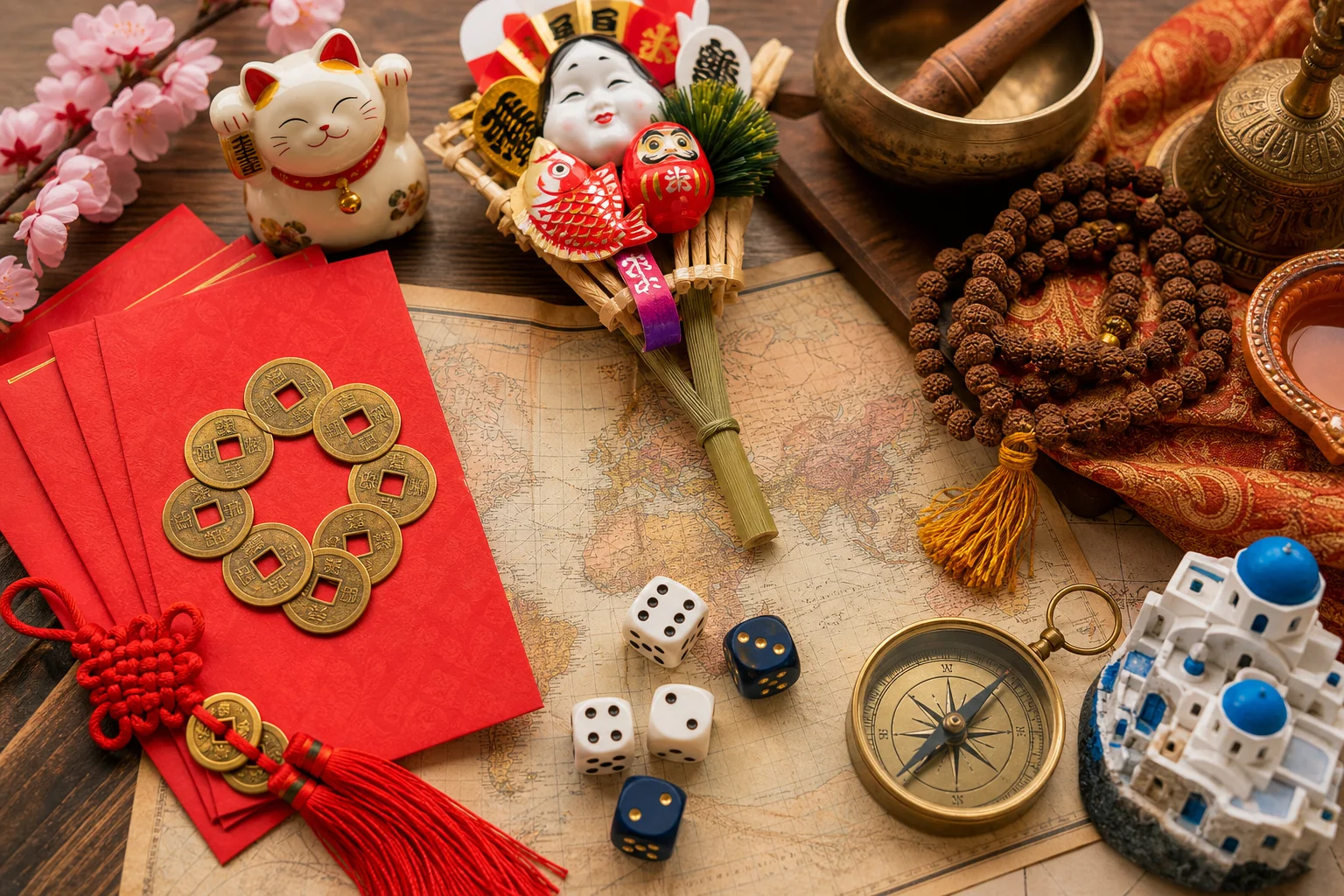
Table of lucky numbers in different countries
Below is a brief comparative table. It does not cover all regional variations but helps to quickly see the main associations.
| Country or region | Lucky numbers | Why they are considered lucky | Numbers that are often avoided |
|---|---|---|---|
| China | 8, 6, 9 | Phonetic resemblance to wealth, smooth success, and longevity | 4 |
| Japan | 7, 8 | Seven gods of fortune, favorable shapes, and traditions | 4, 9 |
| Korea | 3, 7, 8 | Harmony, good luck, modern influence of East Asian beliefs | 4 |
| Thailand | 9 | Phonetic resemblance to a word associated with forward motion | — |
| India | 7, 9, 108 | Religious and spiritual meanings, cycles, and rituals | depends on the tradition |
| Italy | 13 | In some contexts, it is associated with luck, especially in gambling expressions | 17 |
| USA and UK | 7 | Biblical, gaming, and folklore associations | 13 |
| Jewish tradition | 18 | Numerical meaning of the word “life” in Hebrew | — |
| Islamic culture | 7, 99 | Religious motifs and the 99 names of Allah | depends on the region |
China: number 8, wealth, and harmony
In China, the most famous lucky number is considered to be 8. The reason lies in the sound: the word for “eight” in Chinese languages resembles a word associated with wealth and prosperity. Therefore, the number eight is often chosen for phone numbers, license plates, addresses, and dates of important events.
The number 6 is also considered favorable. It is associated with smooth and calm progress. In the business environment, it may symbolize easy advancement of a project. The number 9 is connected with longevity and imperial symbolism, thus it is perceived positively as well.
However, many people try to avoid the number 4 because its pronunciation sounds like the word “death.” In some buildings, you can find skipped floor or room numbers containing four. This phenomenon is known as tetraphobia.
Japan: seven gods of fortune and caution with 4 and 9
In Japan, the number 7 is frequently perceived as lucky. One reason is the tradition of the seven gods of fortune, which symbolize good luck, prosperity, longevity, and protection. The number 7 appears in holidays and rituals, such as the Shichi-Go-San festival, which is associated with the ages of 3, 5, and 7 years.
The number 8 can also have positive meanings. Its shape is sometimes perceived as widening at the bottom, which symbolically connects with growth and prosperity.
However, numbers 4 and 9 are often avoided in Japan. The number four can sound like “death,” and nine can translate to “suffering” or “torture” in one of its reading options. Therefore, these numbers are undesirable in gift sets, hospital rooms, and certain formal situations.
Korea: lucky 3, 7, and 8
In Korea, the number 3 is often associated with harmony and completeness. It can symbolize a balance between heaven, earth, and mankind. The number 7, as in many countries, is perceived as a sign of good luck. In the modern context, this influence is supported by popular culture, games, and international customs.
The number 8 also has positive associations, especially due to the influence of Chinese tradition and the overall East Asian symbolism of prosperity. However, the number 4 is often avoided for the same reason as in China and Japan: it sounds like the word for “death” in Sino-Korean reading.
Thailand: why number 9 is considered lucky
In Thailand, the number 9 is considered especially favorable. Its pronunciation is close to a word associated with forward movement or progress. Therefore, the number nine is associated with development, success, and a good start.
This number is often chosen for important dates, ceremonies, and formal events. In Thai culture, Buddhist traditions also hold great significance, so the symbolism of numbers may blend with religious rituals and blessings.
India: 108, 9, and spiritual arithmetic
In India, numbers are closely linked to religion, astrology, and rituals. One of the most known numbers is 108. It is found in Hinduism, Buddhism, and yoga: for example, mala prayer beads often have 108 beads. This number is related to prayer, meditation, and spiritual practice.
The number 9 also holds significant value. It is perceived as complete and powerful since when multiplied by other numbers in the decimal system, the sum of the digits of the result often reduces back to 9. In Indian tradition, this easily correlates with the idea of completeness and cyclicality.
The number 7 is also common in symbolism: seven steps in the wedding ritual of saptapadi, seven sacred rivers, seven levels or worlds in various beliefs. However, India is highly diverse, so the meanings of numbers may differ by region, religions, and families.
Europe and America: popularity of the number 7 and fear of 13
In the USA, UK, and many European countries, the number 7 is often considered lucky. It appears in religious narratives, folklore, and games. Seven days of the week, seven virtues, seven wonders of the world — all of this reinforces the image of completeness and good fortune.
The number 13, on the other hand, is often perceived as unlucky. The infamous Friday the 13th is well-known. The origins of this fear are explained in various ways, ranging from Christian associations to later folklore and mass cultural representations. In some hotels and office buildings, the 13th floor may still be skipped, although this depends on the country and building owners.
Interestingly, in Italy, attitudes towards numbers differ. The number 13 isn’t necessarily bad and can be considered lucky in some situations. However, the number 17 is often viewed with caution. One reason is the Roman numeral XVII, which can be rearranged to VIXI, meaning “I have lived” in Latin, hinting at death.
Jewish tradition: number 18 and the wish for life
In Jewish tradition, the number 18 is considered lucky due to gematria — a system where letters correspond to numerical values. The word “chai,” meaning “alive” or “life,” has a numerical value of 18. Therefore, monetary gifts are often given in multiples of 18.
This is a good example of how literacy and language shape numerical symbols. Here, the form of the digit is not important, but the connection of the number with the word expressing the main wish — life and prosperity.
Islamic culture: 7 and 99 in religious symbolism
In Islamic culture, the number 7 appears in religious texts and rituals. For example, during Hajj, there are actions performed seven times. Therefore, the number seven may be perceived as a significant and favorable number.
The number 99, associated with the 99 names of Allah, is also widely recognized. It is not always used as “lucky” in a mundane sense but holds deep spiritual significance. At the same time, the perception of numbers in Muslim countries depends on local culture, language, and traditions.
How to consider lucky numbers in travel and business
If you are interacting with people from another country, there is no need to turn numbers into a superstitious set of rules. However, respectful attention to details often helps. Here’s a simple course of action.
- Clarify the country and context. The meaning of a number in a religious ceremony, advertising, or personal conversation may differ.
- Check for undesirable numbers. This is especially important for gifts, table numbers, floors, meeting dates, and pricing packages.
- Use lucky numbers moderately. For example, the number eight may be good for a Chinese audience, but it is not advisable to overload the entire design with it.
- Look at the local language. Often symbolism depends on phonetic resemblance. Translation may not convey the meaning.
- Ask a local expert. For weddings, brand launches, or major deals, it’s best to check details with a cultural insider.
- Avoid generalizations. Different religious and ethnic groups may live in one country.
This approach is useful for marketers, event organizers, travelers, and anyone working with an international audience.
Frequently asked questions about lucky numbers of different countries
What is the luckiest number in the world?
There is no single luckiest number. In Western countries, 7 is often named; in China, it is 8; in Thailand, it is 9; and in Jewish tradition, it is 18. It all depends on language, religion, and cultural context.
Why is number 8 considered lucky in China?
Because its pronunciation is similar to a word associated with wealth and prosperity. Therefore, 8 is often used in numbers, dates, and business symbolism.
In what countries is the number 4 considered unlucky?
The number 4 is often avoided in China, Japan, Korea, and some other East Asian countries. The main reason is its phonetic resemblance to the word “death.”
Why is the number 13 considered bad?
In several Western cultures, 13 is associated with unfavorable connotations, including religious and folklore motifs. But this is not a universal rule: in Italy, for example, 13 may have a positive meaning.
Is it appropriate to give a set of four items to a foreigner?
It is better to first consider the recipient's culture. For someone from China, Japan, or Korea, a set of four items may seem unfortunate. It’s safer to choose 3, 6, 8, or another neutral number.
Conclusion
Lucky numbers of different countries are a shortcut to understanding culture. They reflect language, faith, history, and daily habits of people. If you are planning a trip, gift, wedding, negotiation, or product launch abroad, check local numerical symbolism in advance. This way, you will show respect, avoid awkward mistakes, and make communication more accurate.